THE HISTORY OF
ST. RITA IN THE DESERT
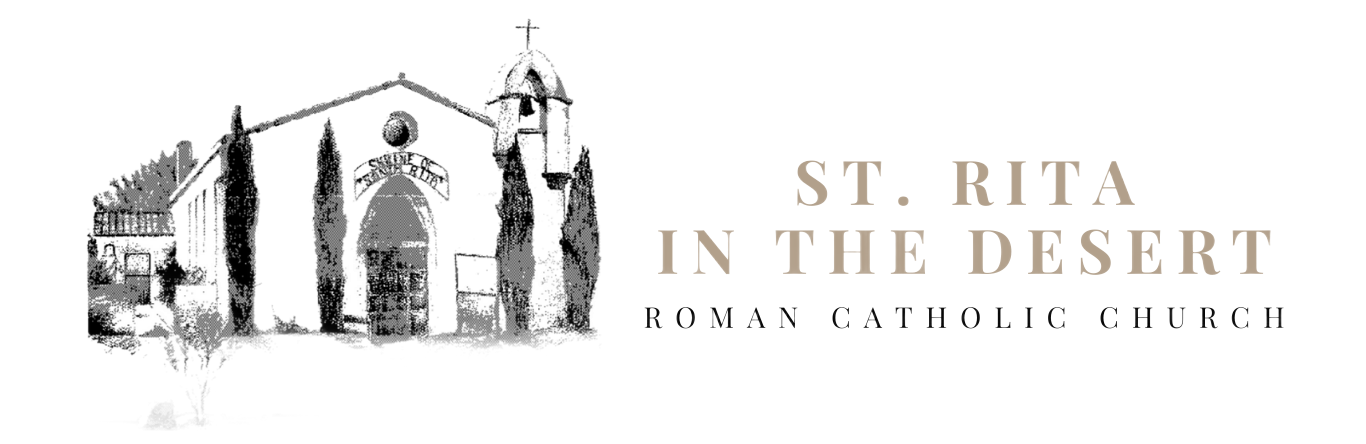
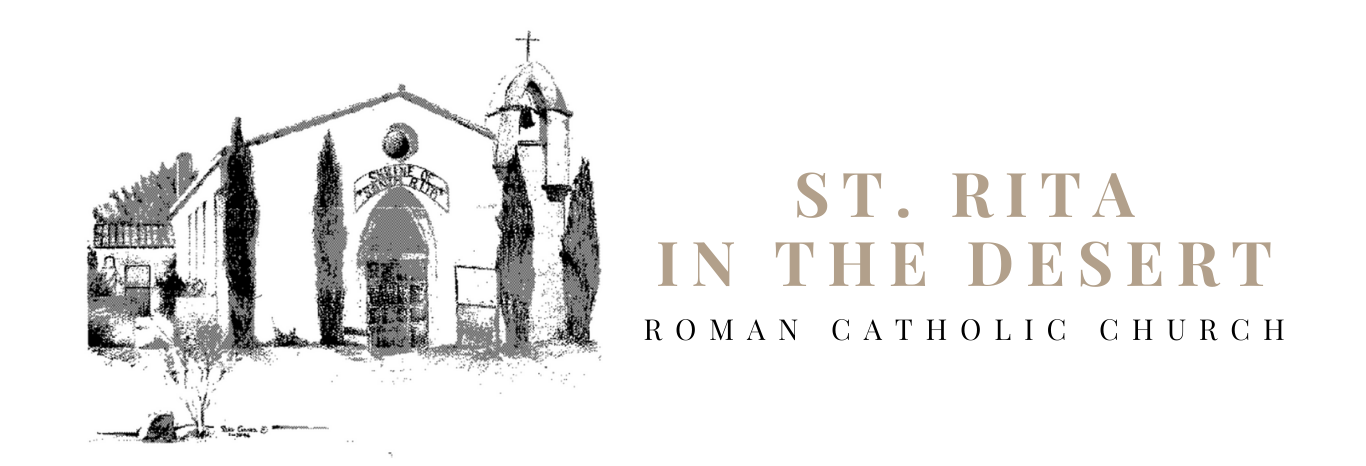
Nestled in the open beauty of the Sonoran desert near Vail, Arizona, our parish has its roots in humble beginnings and a remarkable act of faith and charity. From the vision of a devoted Catholic woman, to a small worship community for railroad workers and ranch families — to a fully active parish serving thousands today — the story of St. Rita in the Desert is a story of faith, hope, and community.
Founding & Origins
- The church — originally known as the Shrine of Santa Rita in the Desert — was built in 1935. (Vail Preservation Society)
- It was founded by Caroline Takamine Beach as a memorial for her late first husband, Dr. Jokichi Takamine(1854–1922). (The Vail Voice)
- Remarkably, it remains the only Catholic church in the United States built in memory of a Japanese citizen. (Vail Preservation Society)
photo credit: Vail Preservation Society
Why It Was Built
- Caroline Beach — a devout Catholic — wanted to ensure that the people living around the small railroad and ranching community of Vail, Arizona, would have a place to worship. In the late 1920s, the local population included many poor Hispanic ranch hands, railroad workers, and homesteaders scattered across the rural area. (Diocese of Tucson)
- Beginning as early as 1927, she arranged for Sunday Mass to be celebrated in the Vail schoolhouse. Over time, she and her husband bought land in and around the town — including the parcel that would become the site of the Shrine. (Diocese of Tucson)
Architecture & Features
- A defining feature of the Shrine is its stained-glass windows, which Caroline Beach purchased in 1931. These windows originally came from the First United Methodist Church on 6th Avenue in Tucson, which had relocated — meaning they were “rescued” and given a new sacred home. (Vail Preservation Society)
- The building reflects a Mission Revival style infused with a sense of simplicity and symmetry — features that echo in its design and share a subtle harmony with the aesthetics Caroline admired. (Vail Preservation Society)
- Interior treasures include a hand-carved crucifix (originally from Bavaria), a statue of the parish’s patroness St. Rita of Cascia, a baptismal font made of green marble, and an altar/tabernacle crafted from stone sourced from the nearby mountains. (Diocese of Tucson)
Early Years & Church Status
- The Shrine was consecrated and dedicated on March 31, 1935. The dedication ceremony reportedly drew some 600 people, and included a community barbecue using steers from the Beach ranch — a true Western-style celebration. (AllSports Tucson)
- From 1935 until 1968, the Shrine (and the small parish community) was served by Franciscan and diocesan priests from nearby parishes. (Diocese of Tucson)
- In 1968, it was elevated to full parish status, becoming what we now know as St. Rita in the Desert. (Diocese of Tucson)
Modern Day & Growth
- While the original Shrine remains a cherished historic and spiritual landmark, the population around Vail has grown dramatically. This growth demanded expansion of parish facilities. As a result, a multipurpose building was constructed to serve as the church for weekend Masses, while the historic Shrine continues to host daily Mass and special liturgies. (Diocese of Tucson)
- The church remains active and vibrant — offering liturgy, outreach, education, and services rooted in Catholic tradition. (Diocese of Tucson)
photo credit: Muench, Josef via Northern Arizona University. Cline Library.
Recognition & Legacy
- In 2015, the Shrine of Santa Rita in the Desert was officially listed on the National Register of Historic Places, a testament to its cultural, architectural, and historical significance — especially given its unique origin story. (The Vail Voice)
- The church continues to serve as a spiritual home for many in the Vail and surrounding communities. Its history — from humble beginnings to its current status — is a witness to faith, charity, and community in the desert.